
Skin Cancer Screening Basics
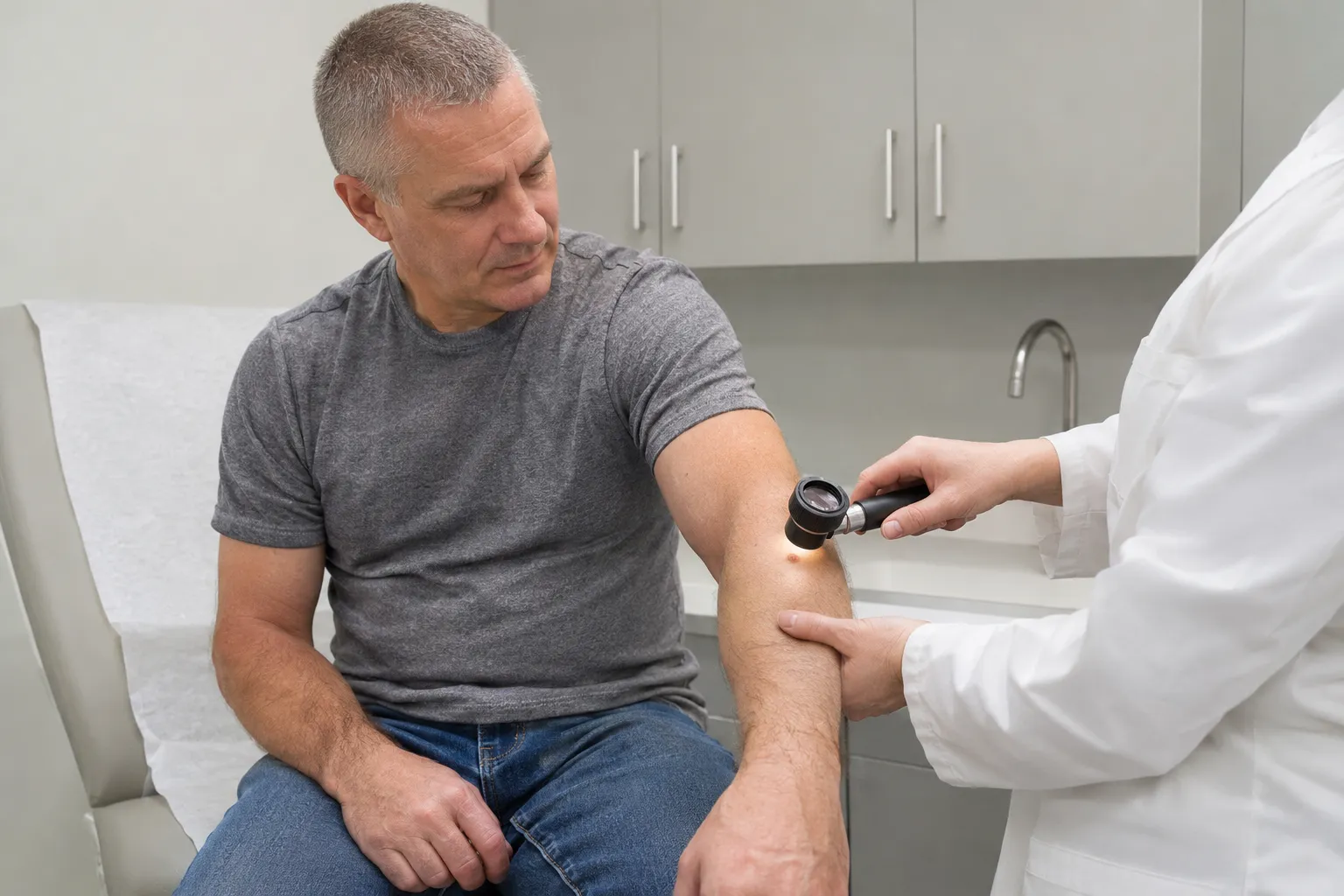
Skin cancer screening is a promise that a check will catch trouble early. The CDC describes it this way: "Skin cancer screening is when a doctor checks your skin for moles or spots that could be cancer." That definition says what the check is. It leaves out what a check achieves for a person with no signs of trouble, and this guide tests that gap against independent sources.
The CDC definition and where it stops
The definition above is firm, because it only says what the check is. What a check achieves for a person with no signs of trouble is a separate question, and the guides below take it up.
On personal risk, the CDC gives one plain instruction: "Talk to your doctor if you have a greater risk of skin cancer." Weighing that risk is a conversation with a doctor, and no page can do it for you. The National Cancer Institute's patient summary on skin cancer screening is a place to read before that talk.
The claim that skin cancer is rare
A skin-check offer works best when the problem feels real. How Common Skin Cancer Really Is sets the national figures against that feeling.
The claim that you can check your own skin
Some readers believe a mirror is all the screening they need. How to Check Your Own Skin tests that belief and shows how the self-check is described by medical sources.
The claim that a spot looks like a dark mole
Many people picture skin cancer as one kind of mark. Basal Cell Carcinoma Warning Signs puts that picture next to a different kind of cancer and the signs that go with it. The CDC also publishes advice on reducing risk for skin cancer for readers who want the prevention side.
The claim that everyone should be screened
A skin-check offer often sounds like it follows a rule. If you hold some version of that belief, open What the Screening Guidelines Say first. It reads the offer against the recommendation of an independent task force and marks where that recommendation stops.